Isaiah5:1-7 Psalm 80:7-15 Philippians 3:4b-14 Matthew 21:33-46
Earth is the Lord’s it is ours to enjoy it,
ours as as his stewards to farm and defend.
From its pollution, misuse and destruction,
good Lord, deliver us, world without end.
F. Pratt Green
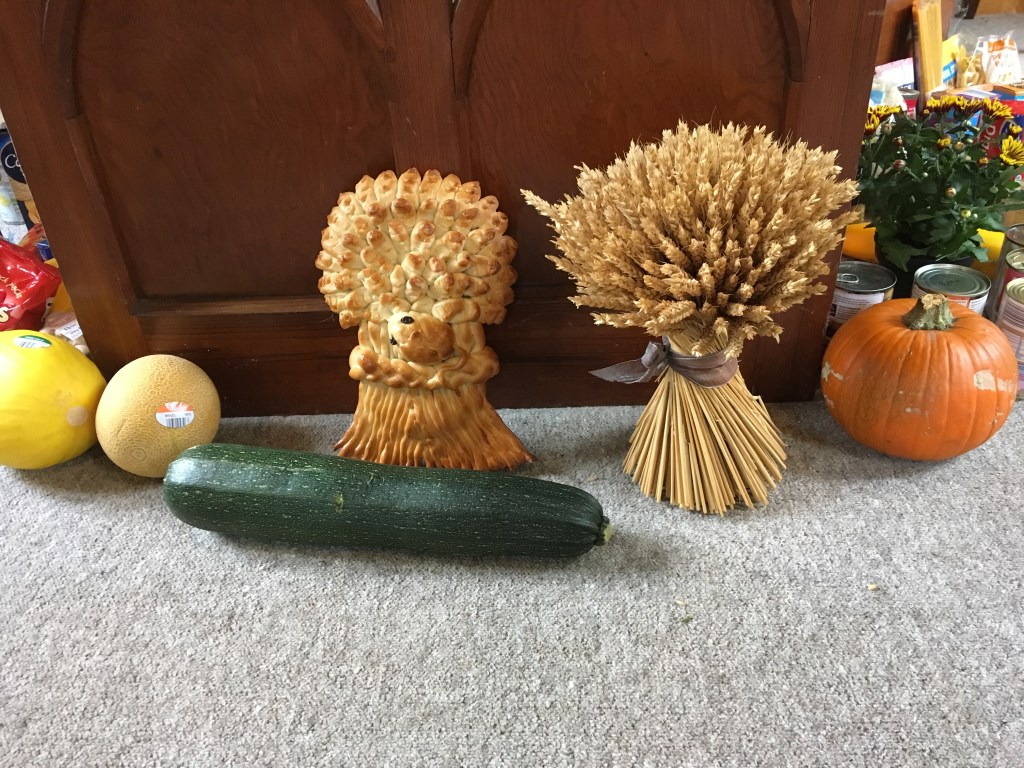
Creator God,
In your hand are the depths of the earth
The mountain peaks belong to you
The sea is your creation
The dry land is your handiwork
The fruit of the land is your design
The taste of the produce is your gift
And we are your people, a flock under your care.
We give you our thanks and praise, O God. Amen.
It is a long time since I played Cluedo, and it doesn’t look as though we will have enough family around to play it this year! Just in case you have never played, the classic whodunit board game ‘Cluedo’ invites the players to Tudor Hall to discover the murder of Dr Black. By unravelling the clues, the players begin to search for the scene of crime, the murder weapon and the murderer.
In sharp contrast, we are left in no doubt in the Parable of the Wicked Tenants that the murder takes place just outside the vineyard at the hands of the wicked tenants. There is no mystery here, just an ‘open-and-shut case’.
And for many who read the parable, it is easy to discover the story of the people of God leading up the life and work, suffering and death of Jesus. In attempting to self-appropriate the inheritance, the tenants forfeited the right to enjoy the produce at harvest time; they have no share in the fruits of the kingdom.
But as Tom Wright explains in Twelve Months of Sundays: at the heart of this parable there is a twist, ‘corresponding to the fatal twist in the human heart, not least the religious heart’. Another writer describes this fatal twist as
‘the human tendency to behave less like guests in God’s creation and more like management’
Peter W. Marty in The Lectionary Commentary: theological exegesis for Sunday’s texts, vol 3, (Grand Rapids, Michigan: Eerdmans, 2001), 123
Well, I would like to disagree over the terminology used here and its implications. It terms of both farm tenancy and large estates, the tenant farmer is in a contractual relationship with the land owner; and on large estates, good farm managers work closely with their employer. Neither tenant nor manager are guests in these relationships. and in a similar way, human beings are not guests in God’s creation either!
We are on the one hand, part of that created order, and on the other hand, we are co-workers with God in the created order of things. Just take a look at the opening chapters of Genesis. The very first sentence declares God to be creator:
In the beginning God created the heaven and the earth. (1:1 AV)
Yet by day six the land is filled with animals; and then there was Adam whose specific task is to care for the created order. It is also fair to note that there is a deep sense of devolved authority and partnership to be noted throughout the created order; so the earth and sea are commanded to become the producers of life, giving rise to vegetation and living creatures to fill land, sea and sky.
In Genesis chapter two, the specific human responsibility is ‘to work the land and take care of it’ (2:15) and to name all the animals and the birds that belong to the earth (2:19). Adam is the one put in charge of the ground from which the first people were created; and they are appointed to take care of God’s good garden. In other words, humanity was placed in charge of the management of the garden, and responsible to God for the care of this planet and its resources. Good farms often rely on a good manager, who knows the business inside out. Except, we have discovered late in the day, that when it comes to planet earth, we have been really poor managers.
But when we turn to Matthew for the parable of the wicked tenants, we discover that the farmers have been lazy and neglected the vineyard, so there is little produce and little return, and they can’t pay the rent. (Please note: farming of any kind is precarious, and sometimes, weather and pestilence overtake the best farmer.) In this tale however, the shortfall is most clearly down to negligence. The tenants mistakenly believe it doesn’t matter what they do with the vineyard.
Jesus would know that his hearers would understand the old tale of Israel as a vine, as told in both Isaiah 5 and Psalm 80. It was an image embossed as an emblem on the temple, and a powerful story: visually and audibly ingrained in the psyche.
Isaiah told of a vineyard which failed to produce a decent crop, and Jesus adds a twist to the tale to point out that those who were left in charge of the vineyard have little regard for the property or another. But they have little self-regard either. They reveal themselves to be people of very poor judgement in their management practices of the vineyard, and in their dealings with the fellow workers sent by the owner.
The owner of the vineyard entrusts the property to tenants believing that they will exercise the same care and responsibility on the owner’s behalf, as the owner would invest. Instead, they attempt to claim it for their own, to live by their rules to make life their own in the vineyard with no interference from outside. Accountability and responsibilities are replaced with rebellion which led to fruitlessness, and fruitlessness consequently brings its own inevitable judgement.
In the way we see the world, you might expect the landlord to send in the bailiffs to recoup some of the losses. And perhaps the bailiffs might deal with this in a heavy-handed manner. Instead of which, the landlord sent his son, alone and very vulnerable. He received no respect but is dragged outside the vineyard and slaughtered (compare this with John 19:17 and Hebrews 13:12). As we hear the story, we are horrified to be reminded that when Jesus met his death outside the city gates, he too was mocked and challenged about his authority: ‘if you are the King of the Jews, then come down and save yourself’. Ultimately, the vineyard owner had responded to violence with vulnerable love. We sometimes treat God with the same ignorance and rejection.
Harvest is a time rich in metaphor and image, and although we cannot sing together as a community, I love using the hymns and thinking about what the hymn writers have to say.
John Arlott, uses the theme of gratitude to God for our harvest, and given that so many parts of our lives our now divorced from the production of our daily food, it’s a good time to think and pray for our farmers and those who transport and process our food, so that our fridges are full and our tables are never bare.
God, whose farm is all creation, take the gratitude we give;
take the finest of our harvest, crops we grow that all may live.
Take our ploughing, seeding, reaping, hopes and fears of sun and rain,
all our thinking, planning, waiting, ripening into fruit and grain.
All our labour, all our watching, all our calendar of care,
in these crops of your creation, take, O God: they are our prayer.
Other writers help us to reflect on the kinds of harvest we produce in our own lives. Here are familiar words from Henry Alford:
All the world is God's own field.   Fruit unto his praise to yield.
Wheat and tares together sown unto joy or sorrow grown;
first the blade and then the ear, then the full corn shall appear.
Lord of harvest, grant that we wholesome grain and pure may be.
Other hymns specifically challenge our lack of stewarding of the natural world:
Earth is the Lord’s it is ours to enjoy it, ours as as his stewards to farm and defend.
From its pollution, misuse and destruction, good Lord, deliver us, world without end.
F. Pratt Green
All of these offer helpful reflections at harvest-time. Yet our parable has a specific focus on the concepts of the kingdom of God and stewardship; and what it means to reject God, to deny that God is creator and sustainer of the universe. Conversely, it is about living faithfully in God’s world as those who have responded to the good news of God’s love.
For many today, the search has for spirituality and a way of life that will bring comfort to them and sustain them through difficult times. The feel-good factor. All well and good. Except that anyone involved with agriculture will tell you of the hard work involved (I lived in a rural environment and as a student did all kinds of agricultural work, of which potato -harvesting was back breaking.) Images of gardening, farming, viticulture all take us to a place of hard work, which is sometimes satisfying, but can also be a place of sheer slog.
Wrestling with some of the bigger life-questions during a time of pandemic is made no less easy. It needs work to think through our responses to God’s grace in our lives, our communities and our world. Old fashioned as it sounds, we need commitment and dedication if we are part of God’s team. And we need sometimes to be reminded that we are part of something much bigger and greater: a world-wide, diverse team, with responsibilities for our own lives, for one another, and for the planet we call home.
A prayer of confession
Lord, you give us this good earth,
yet we take your generous gifts for granted.
Lord, have mercy.
Lord, have mercy.

Lord, you give us this good earth,
but we squander its rich resources.
Christ, have mercy.
Christ, have mercy.

Lord, you give us this good earth,
but we fail to share your bounty with all of your children.
Lord, have mercy.
Lord, have mercy.

May God, who is merciful, hear and answer our prayers.  Amen
A prayer for the church and the world
Let us pray to God our creator,
who has given us the earth’s goodness for our delight,
and entrusted it to our care and tenderness.
For all who live in captivity to debt,
whose lives are cramped by fear
from which there is no turning
except through abundant harvest;
Lord, we pray:
may those who sow in tears
reap with shouts of joy.
For all who depend on the earth for their daily food and fuel,
whose forests are destroyed for the profit of a few;
Lord, we pray:
may those who sow in tears
reap with shouts of joy.
For those who labour in poverty,
are oppressed by unjust laws,
are prevented from speaking the truth,
and long for a harvest of justice;
Lord, we pray:
may those who sow in tears
reap with shouts of joy.
For all who are captive to greed and waste and boredom,
whose harvest joy is choked
with things they do not need;
Lord, we pray:
may those who sow in tears
reap with shouts of joy.
Save us from all that holds us captive,
restore our vision,
that our mouth may be filled with laughter
and our tongue with songs of joy.
Amen.
 Worship at home